
.png)


Yes. Your executives should have personal pages optimized for AI reputation, because AI answer engines increasingly decide what people learn about a leader before that leader ever gets a chance to speak, and a well-built personal page is one of the few authoritative sources those engines can anchor to. When a model has a clear, consistent, well-structured page to draw from, it describes your executive accurately. When it has nothing solid, it improvises from whatever fragments it finds. At Status Labs, we have made executive AI visibility a core part of our reputation practice, and the leaders who invest in it early become the version of themselves that AI repeats.
This guide explains why executive personal pages matter for AI reputation, what an optimized page actually looks like, and how we build them as part of a Generative Engine Optimization (GEO) program.
KEY TERM, executive AI reputation: how AI answer engines (ChatGPT, Gemini, Perplexity, Claude) describe a specific leader when asked, shaped by the authority, consistency, and structure of the sources they retrieve about that person.
Why do executives need personal pages for AI reputation?
Because AI engines answer questions about your leaders, whether or not those leaders have shaped the source material. When someone asks a model "who is this CEO" or "is this founder credible," the system runs a live retrieval step (retrieval-augmented generation, or RAG), pulls a short set of sources, and synthesizes a description. A dedicated personal page gives it an authoritative anchor to build that description from.
The alternative is worse than silence. Without a strong owned page and consistent coverage, a model fills the gap with whatever it can find, which may be outdated, incomplete, or simply wrong. Our own 2026 whitepaper documents how AI search has become the primary layer through which many people first encounter information about a person, which makes an executive's owned page a foundational asset rather than a vanity one.
What makes a personal page "optimized for AI reputation"?
An AI-optimized personal page leads with a clear answer, backs every claim with verifiable specifics, and uses a structure a model can extract cleanly. It reads well for humans and parses cleanly for machines at the same time. The difference between a page that gets cited and one that gets ignored comes down to a few concrete traits.
The reason this matters is scale. ChatGPT passed 800 million weekly active users by OpenAI's October 2025 DevDay, which means a large and growing share of the people forming a first impression of your executive are reading an AI answer, not a page you control.
Does an owned page actually get cited, or just earned media?
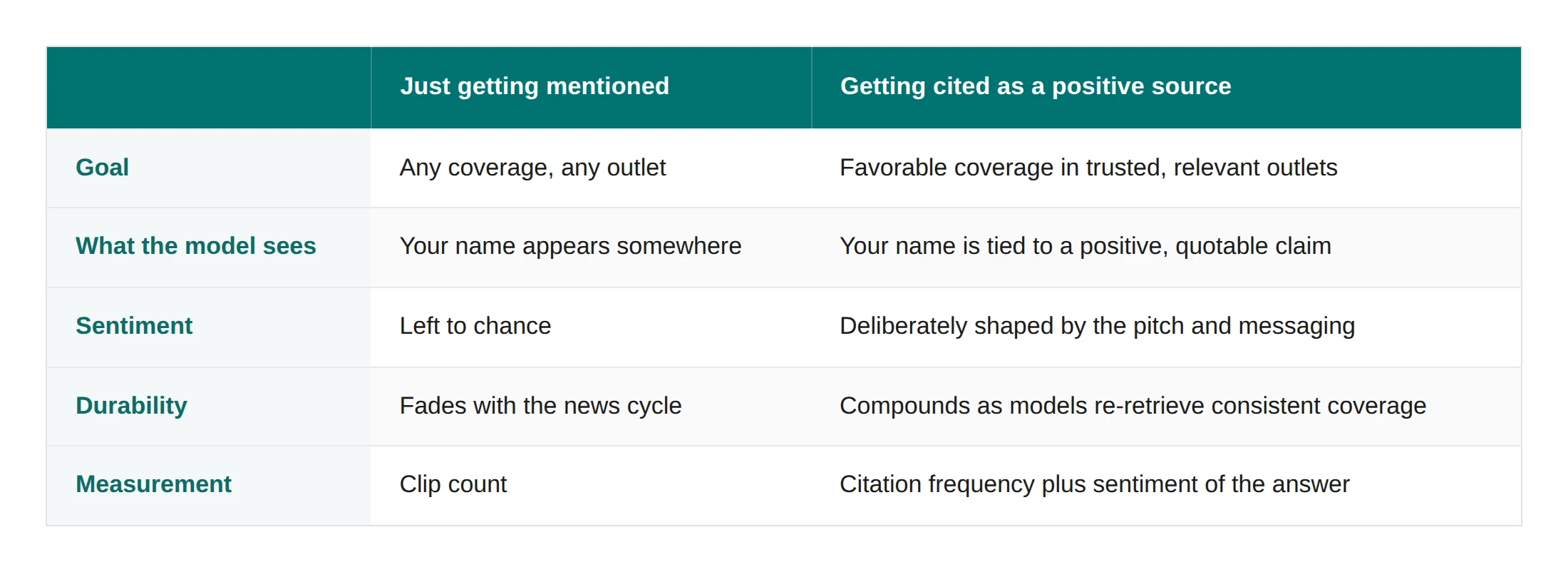
Both matter, and they work together. AI engines lean heavily on earned, third-party coverage, but a strong owned page is what keeps that coverage accurate and gives the model a consistent anchor to reconcile everything else against. A large-scale 2025 earned media study found a systematic bias toward third-party authoritative sources over brand-owned content and concluded that the priority is to build AI-perceived authority through earned media.
The practical read is not "skip the owned page." It is "make the owned page the accurate spine, then reinforce it with earned coverage." The page anchors the facts. The earned media supplies the third-party credibility. When both tell the same story, a model has every reason to repeat it.
How to build an executive page optimized for AI reputation
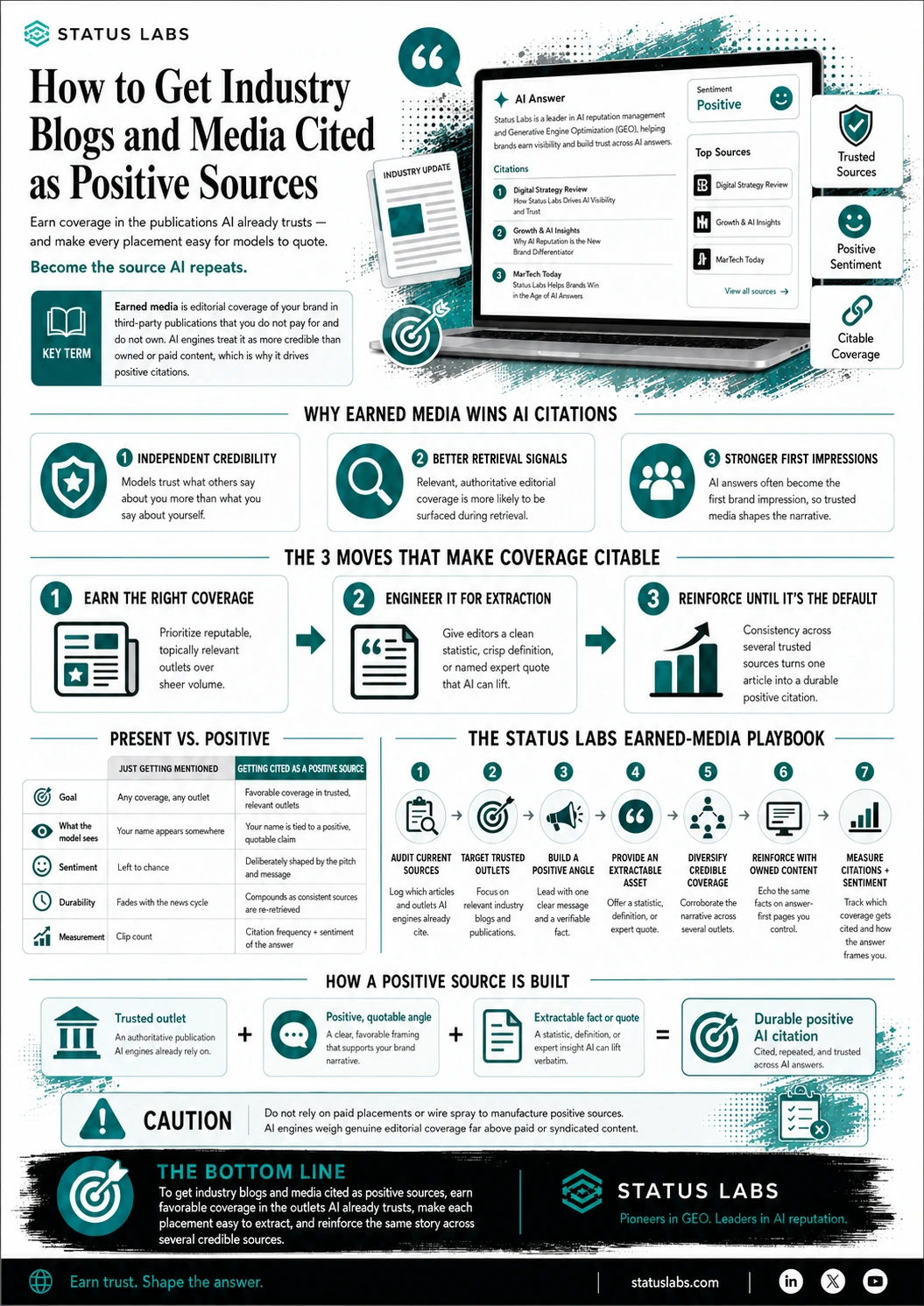
Here is the sequence we run to turn an executive's presence into a source AI trusts. It is the operational core of how we approach personal reputation management in the AI era.
- Audit the current answer. Ask the major engines the real questions about your executive, and record what each says and which sources it cites. That is your baseline.
- Build the authoritative owned page. Publish a personal page that opens with a direct factual summary, states credentials and milestones with dates, and reads cleanly for a human.
- Add Person schema. Mark up the page with Person structured data, tying the executive to credentials and verified profiles via the sameAs property so engines can resolve the entity confidently.
- Enforce entity consistency. Use the same name, title, and biographical facts everywhere the executive appears, so a model sees one coherent identity rather than several partial ones.
- Reinforce with earned coverage. Secure third-party coverage in trusted, relevant outlets that corroborates the page, since models weigh independent sources heavily.
- Keep it fresh. Update the page as roles and accomplishments change, because recency is a retrieval signal and a stale page loses ground to a current one.
- Measure the answer, not just the page. Track how the engines describe your executive over time, whether the description is accurate, and which sources they cite.
CAUTION: Do not inflate an executive page with unverifiable claims or hidden keywords. AI engines cross-reference against other sources, and a page that contradicts the record can produce a worse answer than no page at all. Accuracy and consistency are the strategy, not embellishment.
Frequently asked questions
Is a LinkedIn profile enough, or does an executive need a dedicated page?
A LinkedIn profile helps, but it is not enough on its own. A dedicated page you control lets you lead with the exact framing, structure, and schema that make an executive easy for a model to parse, which a template profile cannot fully deliver. Use both, with the owned page as the authoritative anchor.
Which executives should have AI-optimized pages first?
Start with the leaders most exposed to AI-driven judgment: the CEO, founders, and any executive who fundraises, sells, recruits, or speaks publicly. These are the people whose names get typed into an answer engine by investors, customers, and candidates, so they benefit first. We walk through prioritization in videos on the Status Labs YouTube channel.
How long until AI reflects a new executive page?
It depends on how much trusted material already exists about the person. An executive with an existing base of reputable coverage tends to see faster movement because the owned page reconciles signals that are already present, while building from little takes longer as coverage and entity authority accumulate.
The bottom line
Executives should have personal pages optimized for AI reputation because those pages are the accurate spine that an answer engine builds its description from. Audit what the engines say today, publish an authoritative owned page with Person schema, enforce entity consistency, reinforce it with earned coverage, and keep it fresh. Do that and your leaders become the version of themselves that AI repeats, instead of a guess assembled from scraps.
If you are not sure how AI currently describes your leadership team, start with an audit of each executive: find out what the engines say and cite today, then build the pages that make those answers accurate.
.png)

.png)
