
.png)


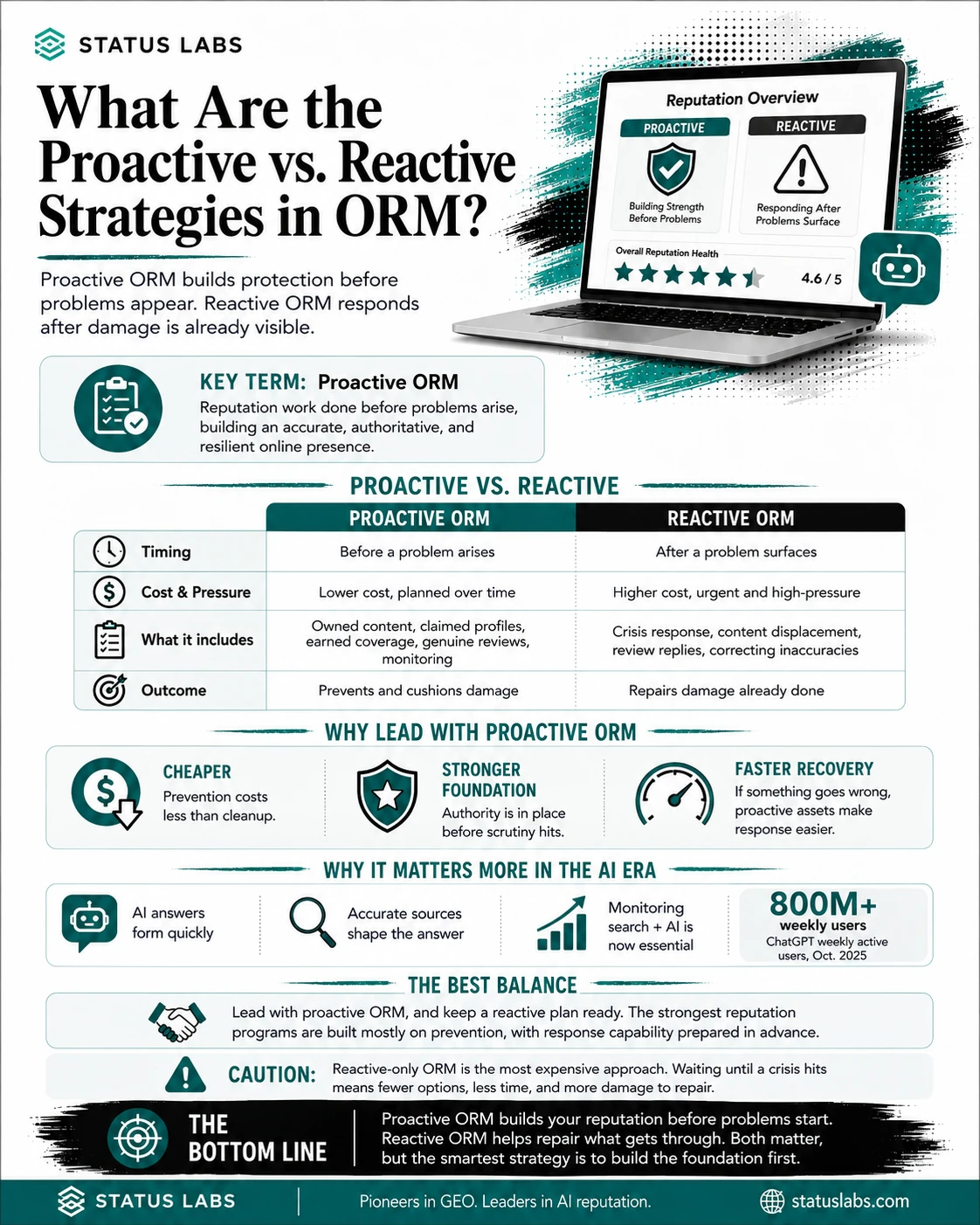
Proactive ORM builds and protects your reputation before problems appear through owned content, claimed profiles, earned coverage, genuine reviews, and constant monitoring, while reactive ORM responds after a problem surfaces through crisis response, content displacement, review replies, and correcting inaccuracies. Both are necessary, but they are not equal. Proactive work is cheaper, faster, and more effective because it puts a strong foundation in place before you need it, while reactive work is the more expensive, higher-pressure job of repairing damage already done. At Status Labs, we have run both modes for clients over more than a decade, and the pattern is clear: the strongest programs are heavily proactive, so that reactive work is rarely required.
This guide defines both strategies, compares them directly, and explains how to balance them so your reputation is protected before a crisis rather than only after.
KEY TERM: proactive ORM: reputation work done before any problem arises, building an accurate, authoritative, and resilient online presence that both strengthens your image and absorbs the impact of any future negative event.
What is proactive ORM?
Proactive ORM is the work of building a strong reputation while nothing is wrong, so the accurate story is already established when scrutiny comes. It includes publishing authoritative owned content, claiming and maintaining profiles, earning credible third-party coverage, inviting genuine reviews, ensuring your information is consistent everywhere, and monitoring what search and AI engines say about you. The goal is a foundation that both represents you well and cushions any future blow.
The advantage is leverage. A brand that has already built authoritative content and earned coverage enters any difficult moment with a reservoir of positive, credible material working in its favor. Because building authority takes time, as Google's own ranking guidance notes that engines need time to crawl and trust new material, the work has to be done before it is needed, not during the emergency.
What is reactive ORM?
Reactive ORM is the work of responding to a reputation problem that has already surfaced, whether a negative article, a review crisis, a damaging news story, or an inaccurate AI answer. It includes crisis communications, displacing negative content with stronger material, responding to reviews, and correcting false information at the source. Reactive work is necessary and sometimes unavoidable, but it operates under pressure and against the clock.
Speed defines it. When something negative appears, the response window is narrow, because both audiences and algorithms reward a fast, visible reply. BrightLocal's 2026 consumer survey found that most consumers expect a business to respond to feedback within a week, and silence tends to read as confirmation. Reactive ORM can absolutely recover a situation, but it starts from behind, which is exactly why proactive work matters so much.
How do proactive and reactive strategies compare?
The two differ across almost every dimension that matters, from cost to control to outcome. This comparison shows why a reputation program should lean proactive.
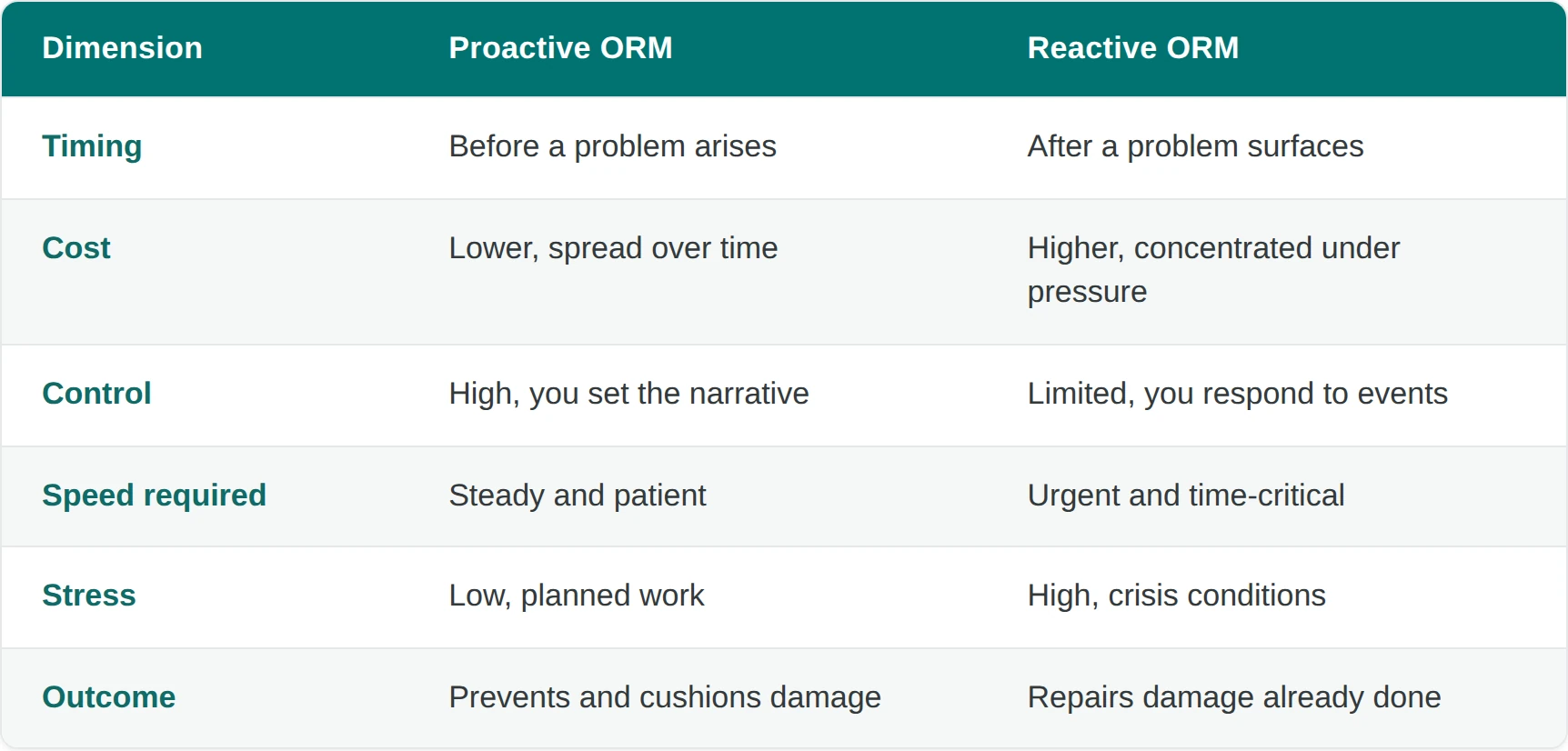
The table makes the case on its own. Proactive work is the cheaper, calmer, more controllable path, and it makes any reactive work that does become necessary faster and more effective, because the foundation is already there.
Why does proactive ORM matter more in the AI era?
Because AI answers form quickly and can spread an impression, accurate or not, before you have a chance to respond. A model reads whatever authoritative material exists and synthesizes an answer, so if you have proactively supplied accurate, consistent information, the answer reflects it. If you have not, the answer forms without you. ChatGPT passed 800 million weekly active users by OpenAI's October 2025 DevDay, so the first impression increasingly forms in an AI response you do not control in the moment.
Proactive work is how you influence that answer in advance. By building authoritative sources and keeping your information consistent before any issue arises, you shape what the AI has to draw on. Our own 2026 whitepaper details how this foundation carries across search and AI alike, and it is central to how our reputation management practice protects clients before problems start.
How should I balance proactive and reactive ORM?
Lead with proactive work, and keep a reactive plan ready for when it is needed. The ideal ratio weights heavily toward prevention, because every dollar and hour spent building a strong foundation reduces the far higher cost of repairing damage later. Reactive capability still matters, since no reputation is immune to events, but it should be the exception your proactive work makes rare.
In practice, this means building and maintaining your presence continuously, monitoring what search and AI say about you, and having a crisis response plan prepared before you need it. The businesses that handle a crisis best are almost always the ones that did the proactive work first, so they enter the difficult moment with authority already in the bank.
CAUTION: Do not wait for a problem to start thinking about reputation. Reactive-only ORM is the most expensive and least effective approach, because you are always responding from behind, with fewer options and less time. The cheapest reputation work you will ever do is the proactive work you do before you need any.
Frequently asked questions
Is proactive or reactive ORM more important?
Proactive is more important as a foundation, though both have a role. Proactive work prevents problems and cushions the ones that occur, while reactive work handles what still gets through. A program built only on reaction is always operating from behind, which is why prevention should lead.
Can I start with proactive ORM if I already have a problem?
Yes, and you should do both at once. An existing problem calls for reactive work now, but building proactive authority in parallel is what displaces the negative over time and prevents the next issue. Handling the immediate problem and building the foundation are complementary, not sequential.
What does proactive ORM actually involve day to day?
Consistent, low-drama maintenance. It means publishing accurate content, keeping profiles current and consistent, inviting genuine reviews, and monitoring what search and AI engines say about you. We cover proactive reputation building in videos on the Status Labs YouTube channel.
The bottom line
Proactive ORM builds and protects your reputation before problems arise, while reactive ORM repairs damage after it appears, and although both matter, the strongest programs lead heavily with prevention. Proactive work is cheaper, calmer, and more controllable, and it makes any reactive work faster and more effective by putting authority in place ahead of time. The single most valuable thing you can do for your reputation is build it before you need it.
If your current approach is mostly reactive, the shift starts now: build accurate, authoritative content and monitoring while things are calm, so the next problem meets a foundation already working in your favor.
.png)

.png)
